23/09/2011

Germany


Previous columns have looked at stereotyping of other countries in pop music. One might think that Germany might suffer particularly here from a British perspective. At the time that pop music was coming of age, popular British culture was still full of an endless re-telling of World War 2. Films like The Dam-busters, or Reach For the Sky, or The Great Escape, packed the cinemas and were routinely shown on TV (In a 2006 UK poll regarding the family film that TV viewers would most want to see on Christmas Day, The Great Escape was  the first choice of male viewers). Children’s comics had strip cartoons of British pilots saying things like “Take that, you square-headed  sausage nosher" as they shot down another Messerschmitt.

This  constant re-run of the past was kept going for decades , satirised by Sparks in their 1972 song  Girl from Germany:Oh, no! Bring her home and the folks look ill. My word, they can't forget, they never will. They can hear the storm-troops on our lawn when I show her in and the Fuehrer is alive and well  in our panelled den “. In such a vein , I once had an elderly relative who would not allow two particular  words to be said in his presence: ‘German’ and ‘pregnant’.  It can still suddenly crop up in unlikely contexts. In a recent discussion about Eurovision between music critic Charles Shaar Murray and Cheryl Baker of Bucks Fizz, Murray made the curious remark that ‘If the Nazis had won, all popular music would sound like this (ie Eurovision).’  Oompah music   = a totalitarian and racist ideology. Hmm.

Yet this perspective didn’t seem to figure much  in pop songs , outside of football chants. In fact, in the early days of pop music Germany hardly figured at all, odd given the significance of Hamburg for the Beatles and the British beat boom and the continued popularity in Germany of artists that vanished from popular consciousness here years ago. (Even now in somewhere like Stuttgart or Munster you might see a poster for a concert by Stan Webb’s Chicken Shack or Alvin Lee). There seemed plenty there  to inspire songs -  castles with towers and battlements perched above the Rhine like  pictures  in a children’ fairy story,  outdoor markets on cobbled streets and the  Gothic Cathedral of a city like Cologne. Yet there seemed few equivalents for Germany of songs like Mary Chapin Carpenter’s What If  We Went to Italy, or Bonnie Tyler’s Lost in France, or even Sylvia’s Viva Espana. Horst Jankowski’s  jaunty piano hit  from 1965 A Walk in the Black Forest, didn’t really count – and unfortunately was a decade too early to be the musical  accompaniment to the classic 70’s English  (with a Germanic tone)  dinner party of cheese fondue, Black Forest gateau and Blue Nun wine. Mmm

 As time passed, this did change. As mentioned before, Berlin as a city has inspired plenty of musical tributes -  from Lou Reed and Bowie to Japan and Rufus Wainwright -  but other towns have attracted less musical attention. Regina Spektor did a song called Dusseldorf, but it wasn't really about the place, any more than Ben Folds’ Cologne gives the listener any sense of that city. A much more evocative piece was Randy Newman’s In Germany Before the War, also set in Dusseldorf and based on a serial killer of the 1930’s. The song has been covered by others, including Katie Melua, but Newman’s version best conveys the underlying creepiness.


The song here from 2006- Germany -  by American duo Ghost Mice gives a rather different perspective, a kind of Bill Bryson-type travelogue with an infectious hoe-down backing. The words, tumbling out before the music finishes, cover a quick backpackers’ tour, taking in a cathedral city bombed in World War 2 - maybe Cologne-, fairy tale castles, the Rhine and a passing mention of Slaughterhouse 5, Kurt Vonnegut’s novel on the fire bombing of Dresden. The song comes from their album Europe, a musical chronicle of the pair’s travels across several countries, apparently done on $10 dollars a day. It sounds an interesting, if hard-going, trip.

It also gives a reminder that reality and stereotypes can be a long way apart. During a  time in Cologne,I stayed with a family who were not sausage-noshers at all but vegetarians, who told a joke about Helmut Kohl and kohlrabi (the punch-line of which I have forgotten). In the column , Let’s Get Out of This Country, I mentioned the ease when in the streets and markets of some English cathedral towns of imagining you were in parts of Germany. A shared history, despite what the films say.


10/09/2011

River Man


A previous column, (Let’s Get Out Of This Country),  looked at some of the more unlikely places that crop up as subjects of songs. There are some, however, which rarely figure. There are , perhaps unexpectedly, several songs about cathedrals and cathedral cities but less about universities and university cities. Schools - yes. Songs about school have been a staple of pop songs since  the early days of rock and roll, perhaps as the spirit of rebellion is easily inter-changed between the two. Hence songs like Chuck Berry’s School Days –“Soon as three o'clock rolls around, you finally lay your burden down, close up your books, get out of your seat, down the halls and into the street” – or Alice Cooper’s School’s Out. But there have also been plenty that have a nostalgic air to them: like Cat Stevens’ Remember The Days of the Old School Yard or Madness’  Baggy Trousers.

Once past school days, however, the inspiration from education starts to wear thin. There was a time, of course,  when pop music was pigeonholed as plebeian entertainment  and performers weren’t expected to have experience of any education past school. When the Zombies hit the UK charts in 1964 with She’s Not There, the papers found it so unusual  that the group members had 50 ‘O’ levels between them that it became the main part of their publicity. More common were the sorts of quotes from some head teacher lamenting  an ex-pupil who had left school early and gone onto success with a group like The Applejacks or Mindbenders; “He is a foolish young man. All right, he has bought himself a car and a house but he hasn’t got  a Maths ‘O’ level to fall back on”. It is also easy to forget just how young some musicians were. When  the original Shadows’ drummer, Tony Meehan, left the group after 3 years or so, he had recently turned 18. By the time Helen Shapiro was 16 she had had a string of hits, including 2  UK Number 1’s and headlined a tour over the Beatles.

With the influence of  graduates of Art School or  university  on 60’s pop and the move of pop music towards  the realms of intellectual and cultural acceptance  this changed –but there were  still few songs  about this in the  way that school days were remembered. Too respectable to sing about?. This is perhaps why there are relatively few songs – as opposed to poems or novels - about Cambridge, so identified with the university and its colleges. Marillion had a rather jaundiced view of it  in their 1985 hit about social elitism, Garden Party (The Great Cucumber Massacre): “Aperitifs consumed en masse display their owners on the grass. Couples loiter in the cloisters. social leeches quoting Chaucer “

 A different perspective was found in a  rare rock eulogy to the place – in Roger Waters’ Granchester Meadows on Pink Floyd’s Ummagumma album. You can walk to Granchester from Cambridge, along by the river  and willows and past the sights  and sounds described in the song. In the village there  is the church in Rupert Brooke’s  poem, The Old Vicarage, Grantchester, with its famous closing lines:Stands the Church clock at ten to three? And is there honey still for tea?”. The clock tells the right time now but you can still get honey –and tea and scones –at The Orchard opposite whilst you sit in a deck chair under an apple tree as the bees and wasps circle round. Next door is the Old Vicarage itself, now owned by Jeffrey Archer and the fragrant Mary.

Yet despite the pastoral idyll nearby and the sense of timelessness amongst the colleges and cloisters, there is something about Cambridge that seems to cast a melancholic air over some of the work inspired by it, including the song here River Man by the English singer-songwriter Nick Drake, from his 1969 album Five Leaves Left. Like much of his work, the lyrics are open to interpretation. Is the river man meant to  be Charon the ferryman taking the souls of the dead across to Hades? Is he a drug dealer? A god of nature, like the Piper at the Gates of Dawn? Is the Betty who comes by a reference, as has been suggested, to Betty Foy in Wordsworth’s poem The Idiot Boy, studied by Drake at Cambridge University? Whatever, the song is like a journey in  a punt  down the river Cam, the rise and fall of the rhythm and of Drake’s voice – from major to minor and back -  like the ebb and flow of the water on the banks as you drift by the lilac trees and fallen leaves

As with much of his work, there is also an autumnal sadness about it, the more acute when the listener knows that Drake was to die 5 years after this record, commercial success eluding him in his lifetime. You think then of another Cambridge musician and drug casualty, Syd Barrett of Pink Floyd, who had also sung of a river in See Emily Play. His own musical star flared brightly but briefly before a return to decades of seclusion in his mother’s home in Cambridge. Look at this photo of a 5-man Pink Floyd in 1968: Barrett, the former front man, is at the back fading from sight in front of your eyes. Or there is the central character in Sebastian Faulk’s novel, Engleby ,which  explores the disturbed mind of a Cambridge student from the 1970’s. It is as though there is for some a golden age in Cambridge - maybe childhood, perhaps  university – after which life is never as bright again, like a colour film changing to black and white
Link to See Emily Play

Maybe Cambridge has that effect  because it is so easy to find the past there in the colleges and cloisters and the punting on the river.  Some of Barrett’s work took inspiration from Victorian literature and a piece like Grantchester Meadows could be describing a Victorian landscape painting. A friend and musical colleague  of Nick Drake is quoted as saying :”Nick was in some strange way out of time. When you were with him, you always had a sad feeling of him being born in the wrong century. If he would have lived in the 17th Century, at the Elizabethan Court, together with composers like Dowland or William Byrd, he would have been alright”.(Robert Kirby).As with Brooke, Drake’s early death means he will always be  remembered as a young man. Out of time - I guess Cambridge is a good place to be for that, where you can float on a river for ever and ever.

02/09/2011

Voyage to Atlantis


Places are not always straight forward. A previous column looked at places that no longer exist but live on in some people’s minds as current reference points (Cole’s Corner). Then there are places that really do exist but sound so exotically remote that it is easy to imagine they are made up. Timbuktu, in Mali, has already been mentioned, with the tune From Kalamazoo to Timbuktu.  Xanadu is  another. Xanadu  (Shangdu)  was the capital of Kublai Khan’s dynasty and the ruins still remain in Mongolia. It is probably best known, however, from one of 3 sources, each of which might lead the listener/reader to think  that it was an imaginary place. In order of credibility, there is the poem Kubla Khan  by Coleridge, written  (in 1797) after waking from a  dream and in which Xanadu sounds like the Garden of Eden. Then there is Dave Dee, Dozy, Beaky, Mick and Tich’s Legend of Xanadu (1967),  complete with sound of whip cracking but which  is possibly historically incorrect in describing the place  as ‘a black barren land’.  Finally, one’s ideas might come from the take by Olivia Newton-John and ELO in  the film Xanadu and song of the same name (1980), a place ‘where your neon lights will shine” and almost definitely historically incorrect.

Then there are places that do not exist but sound plausible enough that you might have to think twice about their possible reality. Shangri-La, for example, the title of a Kinks song as well as a 1930’s novel –maybe it is  a Himalayan kingdom somewhere between Tibet and Bhutan. Or El Dorado (ELO again!)  - perhaps it is somewhere near El Salvador and Guatemala (instead of being, as Edgar Allan Poe put it in his poem of the  same name, “Over the Mountains of the Moon. down the Valley of the Shadow” .You cant miss it).  Or Echo Beach, made famous by Martha and the Muffins. Surely that existed: the single came out with a map on the record sleeve - but apparently it was a figment of the lyricist’s imagination. These, of course, are different from those places that do not exist but no-one ever imagined that they really did., Like The Land of Grey and Pink (Caravan). Or The Land of Make Believe ( Bucks Fizz). Or The Land of Oo-Bla-Dee (Dizzy Gillespie)

There is another  category too, best described as places which may be fantasy or may  have actually   been real but which also now exist in a modern, though more prosaic, form. One example is Albion. It was  an early  name for Britain but took on  more mythical overtones over the centuries, the idea becoming a recurrent theme in Pete Doherty’s music. A more well-known example is Atlantis, the  legendary island that was also supposed to host a lost civilisation and has provided the inspiration for countless books, films, comic strips and video games. The geographical  origins for the story have been placed everywhere from Mexico to Antarctica. However, its inclusion in this blog of places I remember only makes sense if one particular theory is accepted: that the legend was based on  the Mediterranean island of Crete and the Minoan empire of 2000 years or so BC , destroyed by a massive volcano eruption on nearby Santorini.

The theory seems more plausible than most and there are parts of Crete where it would be very easy to believe it. Admittedly it is a  long time since I went to Crete and certainly there was nothing mystical about the stormy journey over from Piraeus on an overnight ferry that had a below-deck toilet almost as bad as the one at Milton Keynes bus station. However, when you see the ruins of Knossos Palace - source of the myth of the Labyrinth and the Minotaur – or the Dictean cave where Zeus was supposedly born, you get a sense of the antiquity of the island. You also realise that there are places there a world away from the clubs and nightlife of the coastal resorts -  decades after the end of World War 2 a Resistance fighter emerged from a hidden mountain location like a Japanese soldier on a Pacific island.

 Most songs that have taken inspiration from the idea of Atlantis, it is true, have taken a more fanciful perspective and Crete doesn’t really figure in them  much, if  at all. Musically, the Shadows were first off the block with a 1963 instrumental hit Atlantis, though in truth the tune didn’t really conjure up Atlantis, any more than their  Kon Tiki conjured up Thor Heyerdahl and his raft. (Sun Ra’s instrumental album, Atlantis, will give the listener a better vision of Atlantis -  or possibly a headache).Donovan really went to town, with quotes from Plato sprinkled through  his Atlantis hit  in 1969: “The antediluvian kings colonised the world..All the Gods who play in the mythological dramas in all legends from all lands were from fair Atlantis.”  Australian outfit Flash and the Pan offered Atlantis Calling in 1980, with lyrics  actually mentioning a Greek island and throwing in the Flood, the Pyramids, the Tiahuanaco ruins and Stonehenge for good measure.

The song here from 1977, Voyage to Atlantis by the Isley Brothers, is really a love ballad with Atlantis as a hook to hang it on. The Isleys were a band who transformed themselves from a 60’s Motown-type vocal group into a rock/funk outfit in the 70’s, with classics like Who’s That Lady and the definitive  Summer Breeze characterised by the silky lead vocals of Ronald Isley and the Hendrix-influenced soaring guitar of Ernie Isley (who also played drums on many tracks). This song follows that trend. Yet  if I listen to the echoing closing bars and imagine  ancient white temple pillars silhouetted against a blue sky, the smell of a lemon grove and wild thyme in the air, and the hot sun throwing spots of  light reflecting  off the dancing waves of the sea, Atlantis/Crete seems quite plausible.

26/08/2011

Boston


There are many examples of towns and cities that carry their history in tandem with the present. Athens and Rome, obviously, where the monuments from centuries of long ago provide one of the main tourist attractions; London, where echoes of the past in the Tower of London, the Monument, the Jack the Ripper walks, mingle with the modern everyday; Dubrovnik, where you enter a medieval walled city in the 21st Century.

There are less obvious examples too, including Boston. It may seem familiar – though not as much as New York - from TV shows but the visitor there (eg me) also becomes aware of a past they may only be vaguely aware of. Take the Freedom Trail, for example, a walking trail along and past several historical sites in Boston: Paul Revere’s house, the site of the Boston Massacre and others. Knowledge of the American War of Independence by the average Briton is probably a bit hazy and can also get mixed up with the flotsam and jetsam of history that floats round the mind. Was George Washington cutting down a cherry tree sometime then? Weren’t the French pretty important in the outcome of the War of Independence and when did they then become cheese-eating surrender monkeys? A vague recollection of a Disney film, Johnny Tremain, sometimes shown on Sunday afternoon TV, with British redcoats stomping about colonial Boston like storm-troopers whilst the townsfolk sang Sons of Liberty.

The Boston Tea Party was in the film too, of course - also the unlikely subject of a hit by the Sensational Alex Harvey Band in 1976. This historical era, in fact, has cropped up a few times in pop music. 60’s American rock group Paul Revere and the Raiders performed in full historical uniforms. (This trend, as with Union Gap in American Civil War dress, seemed mainly an American phenomenon. I can only think of the New Vaudeville Band and their Edwardian toffs’ attire as a UK comparison). Lonnie Donegan had a big UK hit in 1959 with a version of Johnny Horton’s Battle of New Orleans ( not Boston, obviously, but same era), primly substituting ‘bloomin’ British’ for ‘bloody British’ in the lyrics. Horton’s version, though, is worth seeing just for the exploding alligator and balletic redcoats.

However, it is always something of an eye-opener to visit a country abroad and see a glimpse of history through their eyes and not through the lens of your own country. In Cuba, for example, seeing the photos - and hearing the accounts - of the missile sites of 1962 or realising, as you are asked to leave your rucksack at the entrance of a shop in Havana, that you could be seen as a potential terrorist come to bomb. In Boston, it was my daughter’s American partner urging us to see Bunker Hill; ”that’s where we whupped you”.

The historical side of Boston, however, is only one of many and there has always been pop music from and of Boston to keep its image contemporary as well. In the late 60’s record companies, seeing the success of West Coast groups, tried to kick-start the ‘Boston/Bosstown Sound’, largely based round local groups Beacon Street Union and the wonderfully-named Ultimate Spinach – though it never really got off the ground, any more than the ‘Farnborough Sound’ did in the UK. With Ultimate Spinach in mind one could, however, draw up a dinner menu of sorts based solely on the names of groups. It might look like this:
Starters
Grapefruit
Eggs Over Easy with Salt ‘n Pepa and Bread with (Great )Peanut Butter (Conspiracy)

Main
Meatloaf , Wild Turkey or Fish with Red Hot Chilli Peppers, Black-Eyed Peas, Ultimate Spinach and a Smashing Pumpkin

Dessert
Raspberries or Cranberries with Jam and Cream
Coffee
Vanilla Fudge

Since then however, there have been scores of songs that have looked at Boston from every angle: an impressive list was given in the comments on the Paris Bells column. Some, like Shipping Up to Boston by the Dropkick Murphys, have celebrated the boisterous waterfront life. There is the lyrical description of the Fens area by Jonathan Richman: “And there's a silence to that place as you stand there in the sun, and there's also this haunting silent sorrow, because the glory days have gone“. There is Augustana’s vision of escaping California for a new life in Boston, in their song Boston: heading eastwards, not westwards, to a promised land.

Against some of these the song here, also just called Boston, might seem at first a bit incongruous, too laid back and mellow, a geographical relocation of I Left My Heart in San Francisco . It is from a 2004 album, Outrun the Sky, by Lalah Hathaway, daughter of soul singer Donny Hathaway, and who has a smoky, velvety voice that has echoes of Cassandra Wilson. Yet, for me, the mood of it fits what I experienced there in parts of the city. Like watching people playing chess in an outdoor cafe in the afternoon sun; or going for breakfast - including Greek yogurt and blueberries - in the relaxed atmosphere of Zoe’s Diner in Cambridge; or ambling along the Freedom Trail, though giving up before Bunker Hill in favour of a drink and cake in the Faneuil Hall Market.

A song by the Mighty Mighty Bosstones, They Came to Boston, criticises visitors just like me, seeking out Quincy Market or the Swan Boats in the Public Gardens: ‘They came to Boston on their vacation. They came, they saw, they annoyed me. They saw it all, what! Faneuil Hall! It's best if they just avoid me..they found the Hub confusing,looked for the Swan Boats in Mattapan, well, I find that real amusing".  A similar attitude, I guess, to the derogatory South Coast term of ‘grockle’ to describe seaside holiday tourists. I subsequently looked up an old Ultimate Spinach track - Genesis of Beauty - and sensed in the opening bars the same sort of drift away feeling as the Lalah Hathaway tune, a side of Boston no less, or more, real than that seen in the songs of the Dropkick Murphys or in Boston Legal –or, for that matter, the Mighty, Mighty Bosstones. Different sides in tandem, just like the past and present.

Link to song

17/08/2011

Niagara Falls


There are some places that tend to figure more in songs as an image for something else, as a symbol or metaphor, rather than as a place in reality. This was touched on in the column on Rome (Weekend a Rome), where a song is as likely to reference the place with lyrics about ‘all roads lead to Rome’ or ‘Rome wasn’t built in a day’ as to be about the actual city itself. There are other examples, sometimes with places seemingly so remote that actual travel there seems akin to going to the moon. The trend was perhaps started by an early 50’s big band record, Kalamazoo to Timbuktu (which also became the title of a children’s story book later). Both are real places but the train journey the song describes is as unlikely as the names themselves. In fact, ‘going to Timbuktu’ passed into everyday speech as the epitome of something that would definitely never happen: as in ‘ Try getting to North Walsham by bus from Norwich after 3pm. It’s like going to Timbuktu’. Billy Joel later used another real place ,the Great Wall of China, with a similar intention in his song of the same name:“We could have gone all the way to the Great Wall of China,if you'd only had a little more faith in me”.

There is another famous landmark that has cropped up time again in songs not as a place to actually visit and see but as a metaphor: Niagara Falls. There are many other spectacular waterfalls across the world, of course: Iceland has several, including  one  at Gullfoss. However, it is Niagara Falls that has captured the imagination most, with assorted folks going over it in a barrel or walking across it on a tightrope for the past 150 years or so. Yet it has also been the inspiration of several songs that have turned it into imagery for something else. Take Niagara Falls by Sara Evans, which starts off with the promising and undeniably true statement of “Standing at the edge of this cliff, gravity being what it is, I'm afraid that I might stumble” but then resorts to a lyrical cliché in “asking me not to love you is like asking Niagara not to fall” . Chicago used the same metaphor in their Niagara Falls: “As long as Niagara falls, as long as Gibraltar stands, till hell freezes over I'll always be your man” (Gibraltar is roped in presumably to supply a suitable rhyme for ‘man’). Rapper Lil’ Wayne came up with an inevitable – actually the only possible - rhyme in Love Me or Hate Me:”I've been through it all, the fails, the falls. I'm like Niagara but I got right back up like Viagra.”

Perhaps the best example here is Everybody Knows (Niagra Falls) by Elliott Murphy. He was one of those singers who had the misfortune to be labelled ‘the new Dylan’, a phrase thrown at selected artists from Phil Ochs onwards, taking in Bruce Springsteen , John Prine, Conor Oberst and a long list of others on the way. In Everybody Knows, Elliott Murphy not only uses the image of going over the Falls in a barrel without it seeming contrived but gets in a mention of Buffalo, a kind of staging post 20 miles away from Niagara Falls. Buffalo seemed to me in the same category as Westward Ho!, a town whose title doesn’t live up to current reality. With a name redolent of the Old West, it should look like this, with a tumbleweed or two drifting down the main street:
Link to photo
The bit I saw was more like an industrial estate, with –somewhat incongruously- a prominent House of Horrors as a main attraction.

The song here from 2009 - another titled Niagara Falls - by Brooklyn indie rock band, Harlem Shakes, is a more lyrical ode , driven by piano and drum machine and a simple chorus that nevertheless captures something of the sight of Niagara Falls, something difficult to do in words: ” Always awake, you break and break and crash and crash, and flow and flow”. Sailing through the spray below on the Maid of the Mist, or standing watching at night as the light show turns the waters blue and red and purple like a vision from an unsettled dream, you get a sense of what has inspired the musicians and novelists over the years - though it did come as a surprise to discover that the Falls can effectively be turned off (which would mess up Chicago’s song). You can also see why observers turn so readily to symbolic meaning, with the endless and powerful falling of water, the drop down into an abyss, the mists and rainbows. But maybe best to see it for what it is - a place to remember.


03/08/2011

Summer In The City

As with classical music, it has been a recurrent characteristic of songs that they easily lend themselves to the changes of the seasons, both lyrically and musically. Sometimes, the result can be surprisingly effective: Bettye Lavette’s powerful performance of Through the Winter is so desolate it makes the listener feel as bleak as the title. At other times, the association of song and season can be a bit, well, obvious. In the Chi-lites’ Coldest Day Of My Life, the lines “I remember, oh, yeah, the signs of springtime. There were birds, music everywhere “ are accompanied by a flute chirruping like a blue bird in a Disney cartoon.

The same applies to places and seasons. For various reasons - to do with geography, cultural association or just the peak time when tourists go there – some cities are musically linked more with one season than another. Paris and springtime, Rome and summer. Yet what is striking is how the musical images raised by summer, in particular, can change when linked to particular places. Take Greece, for example. The sub-Abba song In the Summer Sun of Greece by A La Carte is typical of musical visions of Greece - all orange groves, sparkling sea and sunshine. If, however, you focused in and imagined that there was such a song called Summer in Athens, the mood would be different. It might have to deal with darting from cafe to cafe to avoid the heat, standing in a bad-tempered queue of backpackers to get a glimpse of a bit of the Acropolis and wondering who on earth might buy the bear that has been hanging outside a butcher’s window for at least a week.

To some extent the same sort of difference can be found in summer songs of England and London. Summery songs about England tend to be about the countryside or seaside, like Seaside Shuffle or In the Summertime. Songs about summer in London, however, are more ambivalent.  Madness described 'Summer in London' in  A Day On The Town with a characteristic cynical perception - seeing the union jack t-shirts and mugs and £6 ice cream cones.: “Chip on your shoulder, chips in your mouth, Can you see the old lady, with tickets to tout. Getting the tourists into their traps, taking their money, the shirts off their backs”. The Pogues had a downright depressing picture in Dark Streets of London: “And every time that I look on the first day of summer takes me back to the place where they gave ECT, and the drugged up psychos with death in their eyes and how all of this really means nothing to me”.

For the outsider, summer in New York, however, carries a more stereotyped set of images gleaned from TV shows and films set in the city: sticky heat and rising tempers as electricity cuts hit, kids splashing in the jets of a sprinkler fire hydrant, a cop wiping sweat off his head as taxi sirens blare. The song here, Summer in The City, neatly captures that picture and mood, with its driving rhythm, pounding drums , sounds of traffic and descriptive lyrics; “All around, people looking half dead, walking on the sidewalk, hotter than a match head”. The song has been covered a number of times - by Joe Cocker and Quincy Jones amongst others - and has been used as background music in a number of adverts and films, including Die Hard: With a Vengeance: not surprisingly perhaps as there is a cinematic element to the song. The version here is the original one from 1966 by New York group The Lovin’ Spoonful , a contrast to their more familiar good-time and laid-back summery feel. In a relatively brief period of time in the mid-sixties, the group notched up an impressive number of John Sebastian-penned songs that remain timeless, with an instant feel-good effect: their first big hit, Do You Believe in Magic, with the priceless lines “I’d tell you about the magic , it’ll free your soul but it's like trying to tell a stranger about rock and roll”; You Didn’t Have To Be So Nice (I would have liked you anyway); and a dozen more. (Sebastian was also a skilled harmonica player and can be heard to good effect on Judy Collins’ Thirsty Boots).

In the clip below, the group are miming. That is not unusual but it is an example of a performance when it is obvious that the act are miming through deliberate intent: guitarist Zal Yanovsky is having a conversation at one point. Some acts seemed to do this, possibly to show their disapproval of having to mime as it implied a slight on their capabilities. Guitars remained slung at the side, drumsticks hit the air, at times signs saying ‘We are miming’ were held up. This was different from those occasions when a technical hitch left an unfortunate act stranded and mouthing like a fish out of water. One such time was All About Eve performing Martha’s Harbour on Top of the Pops in 1988, when the group were unable to hear the backing track and sat patiently waiting for it to start.


There is another song - Up On the Roof - that does not actually mention New York but was clearly inspired by it and which acts as a neat counterpoint to Summer in the City – it takes the listener to rooftop level above the traffic noise and jackhammers drilling in the road. It was a Goffin/Carole King song - written in the Brill Buildings on Broadway that remain a landmark on the bus tours round New York - and was originally a USA hit for the Drifters in 1962. There have been several versions since, including Carole King herself, James Taylor and Ike and Tina Turner but oddly the hits of the song in the UK have been from unlikely sources. Singer-songwriter/entertainer Kenny Lynch had the first hit in 1962, followed in 1995 with a Number 1 by TV actors Robson and Jerome, the video of the song showing them prancing about against a Manhattan skyline with - being British-an obligatory afternoon cup of tea. Perhaps the most sublime version, however, was by another New York singer-songwriter, Laura Nyro, capturing hustle and bustle and serenity in 3 minutes: ironically for a prolific songwriter in her own right, this was her only hit as a performer.

Hot town, summer in the city. The words somehow imply the need to escape somewhere – to the roof top in New York, to the relative cool of a museum or café in Athens, to the shade of a willow tree in London’s Regents Park. Waiting for the autumn leaves to start to fall.

Link to song

23/07/2011

English Rose/Old England


As a child, one of the things around the house was a wooden jigsaw of the counties of England: I remembered it recently when I saw such an item mentioned in the novel England, England (Julian Barnes). The names of the counties, like Rutland or Suffolk, were as remote and exotic as the names of the cities - Copenhagen, Budapest - on the dial of the old radio that also lay about. As I remember it, the jigsaw was brightly coloured and there were no towns or cities marked, giving the impression of a rural, colourful, miniature world. By such trivialities are impressions of a word- ‘England’ - formed.

.A previous column, Goodbye England (Covered with Snow), looked at one of the perennial images of ‘England’: a snow-covered English countryside and folk memories of a more ancient rural past of old England. The comments in the last column gave many other images that might appear in song. Yet in the early years of British pop the idea of songs about England barely occurred – the perspective was largely an American one. In fact the novelist Colin MacInnes wrote a book called English, Half English (a phrase later taken up by a Billy Bragg song) in which he spoke of bi-lingual singers like Tommy Steele “speaking American at the recording session, and English in the pub round the corner afterwards." ‘England’ in musical terms was largely confined to two genres. There was English folk music, like jazz largely in its own world: it wasn’t until Fairport Convention and their 1969 album Liege and Lief that folk started moving into the pop/rock mainstream. There was also comedy/light entertainment, a world in which ‘English’ meant pompous gents in bowler hats or comic Andy Capp figures in overalls and probably on strike – as in the Bernard Cribbin songs, Right Said Fred (note the recurring references to 'a cup of tea'!) and Hole in the Ground, both UK hits in 1962; or Lonnie Donegan’s My Old Man’s A Dustman.

Otherwise, English pop remained largely westward looking, across the Atlantic to the USA. As mentioned before, the Kinks were a rarity in 60’s pop in their English perspective and especially in showcasing traditional English work-class culture in songs like Autumn Almanac (‘I like my football on a Saturday, roast beef on Sunday is all right. I go to Blackpool for my holidays, sit in the autumn sunlight’), not to caricature it but to lament a way of life disappearing. They were followed by others - the Jam, Blur, the Smiths, Pulp – and the notion of ‘Englishness’ became more of a fit subject to tackle in songs. However, they tended to be from a home grown perspective for, as Laura has commented in a previous column, there are very few examples coming the other way across the Atlantic, of American songs picking up on English mythology : no equivalent of Ian Hunter’s infatuation with American mythology, for example.

Songs about England or being ‘English’ by and large avoided the obvious stereotypes of Beefeaters, bowler hats and red phone boxes. However, there was a delicate balance to maintain and it was easy to end up either sounding nationalistic and overly patriotic or maudlin and sentimental. Kate Bush, for example, went a bit over the top with Oh England, My Lionheart, her 1979 portrait of a romanticised old England seen through the eyes of a Battle of Britain pilot: “Oh! England, my Lionheart! Dropped from my black Spitfire to my funeral barge. Give me one kiss in apple-blossom. Give me one wish, and I'd be wassailing in the orchard, my English rose, or with my shepherd, who'll bring me home.”

There were, however, several more prosaic takes on England that struck a chord with their audiences - like Ian Dury’s England’s Glory, rattling through a long and eclectic list of cultural references that you could spend hours dissecting:  “Nice bit of kipper and Jack the Ripper and Upton Park. Gracie, Cilla, Maxy Miller, Petula Clark .Winkles, Woodbines, Walnut Whips, Vera Lynn and Stafford Cripps, Lady Chatterley, Muffin the Mule. Winston Churchill, Robin Hood, Beatrix Potter, Baden-Powell, Beecham's powders, Yorkshire pud “ (Rhyming walnut whips and Stafford Cripps is genius!).There was also a strange song, England, My England, by Alan Price from 1978. He had had success in 1974 with the Jarrow Song, an unusual hit -about class struggle - in the era of Glam Rock: a slice of English history with a tribute to the Jarrow march of unemployed workers of 1936 and which hit the UK charts at the time of the first Miners strike. Four years later, however, England, My England seemed a conservative view of England with lyrics that sounded like a Daily Mail moan about the state of the country: irony or disillusionment, I am not sure which.
The two songs here represent two of the genres about England that have reoccurred over the years. The first is English Rose by the Jam, a Paul Weller ballad from their 1978 album All Mod Cons and seemingly as out of step with its contemporary peers as Autumn Almanac had been in 1967. Many songs about England have taken a Rupert Brooks , ‘Is there honey still for tea?” romantic/nostalgic type of approach and some can end up wrapped up in mysticism or unthinking nationalism. Some, however, have come from a strand of English socialism that is radical and patriotic at the same time, best represented now by Billy Bragg but with echoes in Paul Weller and Ray Davies and back through Orwell, the Chartists and William Cobbett. It is a thought also perhaps found in Ralph McTell’s England: “And the echo from the green hills runs through the city streets. And the wind that blows through England, Well it breathes its life in you and me.”

There are those, however, who would see all the above as sentimental tosh and whose view of England is a much more jaundiced one. The Sex Pistols. Or Lady Sovereign’s My England from 2006 –“ Cricket, bowls, croquet, nah PS2 all the way, in an English council apartment. We don't all wear bowler hats and hire servants, More like 24 hour surveillance and dog shit on pavements.” And the song here, Old England by the Waterboys, from 1985 (with a very 80’s saxophone): a bleak , depressing and rather over-wrought snapshot of England.

“ Evening has fallen, the swans are singing. The last of Sundays bells is ringing. The wind in the trees is sighing.” A welcome home or a death gasp – whatever you want to see, I guess.
Link to English Rose
Link to Old England

14/07/2011

Breakfast in Spitalfields


The image of the cathedral town (last column) is one of the enduring set of images that make up the notion of ‘England’ for many tourists, with the obvious physical presence of history and heritage stretching back centuries and the sense of a place that is in something of a time warp Part of that is the opportunity to experience a particular part of that image: the institution of English afternoon tea, at places like Bettys in York or Sally Lunns in Bath, where you can choose between a Queen Victoria’s Tea or a Jane Austen Cream Tea.

At first glance all this seems not a likely topic for pop songs, not really very rock and roll at all. If you are going to sing about refreshments, surely it should be something like Sham 69’s Hurry Up Harry: "Come on, come on, hurry up Harry, come on. Come on, come on, hurry up Harry, come on. We’re going down the pub..” Then you recall the penchant of rock’s aristocracy for following in the footsteps of the nineteenth century aristocracy, with the mansions and stately homes in Surrey and Oxfordshire - Bill Wyman actually became Lord of the Manor at Gedding Hall in Suffolk. With this in mind, it is then less surprising to find songs that seem to celebrate the tea-and-scones ritual that Queen Victoria and Jane Austen apparently enjoyed. Paul McCartney’s English Tea from 2005, for example; or Tin Tin’s 1970 early Bee Gees- sounding track Toast and Marmalade for Tea ;or the brief ode to afternoon tea that Sam Brown sneaked in between tracks on her 1988 Stop album


These and others remind the listener that songs about places to eat are part of pop music’s landscape and help shape perceptions of a place. Some already mentioned in previous columns are very evocative of a particular time and place. Mario’s Cafe, for example, of Kentish Town in the early 90’s; or Watford Gap, with its plate of grease and load of crap (this is a historical comment, of course, not a reference to the fine menus currently on offer), opening a window on the groups of the 60’s and 70’s trundling in their Transits up and down the M1.Or the seafront cafe in Every Day is Like Sunday, bringing the aroma of an out of season seaside resort with its greased tea.

There have been others over the years, with many using the backdrop of a cafe or restaurant to foreground a little story. Some of these followed a mini-Brief Encounter scenario set over a cup of tea or coffee - .like the Kinks with Afternoon Tea (again!) in an unidentified cafe, presumably North London:, “At night I lie awake and dream of Donna ,I think about that small cafe .That's where we used to meet each day and then we used to sit a while and drink our afternoon tea”. More recently (2007), Landon Pigg has described a similar romantic encounter in Falling In Love at a Coffee Shop. Suzanne Vega’s Tom’s Diner , a vignette in another New York coffee shop, was like a musical mini-film in its descriptive story.

Others have opted for such a setting to create a mood rather than tell a story and the song here from 2011, Breakfast in Spitalfields by Spanish born singer Juan Zelda, is one such of these. Spitalfields has come up before, in Cath Carroll’s reference to Hawksmoor’s lost underground in London, Queen of My Heart, her song about ‘mythical London, deserted 2am London’. In this song, however, it seems light and summery and rather mellow, not dark and secret. The duality of the area, perhaps. Old churches and plague pits by the towering glass-fronted office blocks, the wealth of the City banks a stone’s throw from overcrowded housing and poverty.

In watching the accompanying video I was reminded of an old TV advert from the 80’s for the Halifax , in which a loft-living yuppie in somewhere like Spitalfields , looking like he needs a smack on the nose, goes out on Sunday morning to draw out some cash to the sounds of Lionel Richie ( and presumably pays for his paper with a £10 note).
The narrator in this song distances himself from that side of Spitalfields, from ‘the men in suits who polish their boots’ and, judging by the video, he goes for a proletarian/rock and roll breakfast :in fact the sort of plateful that Roy Harper would have got at the Blue Boar in 1973.(If he had gone a bit further on to St John’s Bread and Wine restaurant by Spitalfields Market he could have had poached fruit, yoghurt and toasted brioche as well as an Old Spot bacon sandwich for his breakfast, instead of sausage and egg)

Hawksmoor’s lost underground still lurks there the same though, behind the summer sounds . As Cath Carroll commented earlier, “the past has never left us. It lives in the same space that we do”. It is all there still - plague rhymes and afternoon tea alike.


.

03/07/2011

Let's Get Out Of This Country


As seen in previous columns, songs about places can paint a broad picture by bringing the focus down to a particular building. In Coles Corner, Richard Hawley used a long-gone department store in Sheffield to create a nostalgic mood for a bygone time and place. St Etienne’s Mario’s Cafe was equally evocative of an era : “Button up your sheepskin caraway, rainy cafe, Kentish Town, Tuesday...and Eubank wins the fight and did you see the KLF last night?” Nick Cave’s Grief Came Riding put Battersea Bridge at the centre of a study of introspective gloom.

The scope of music is such that the most unlikely places for a pop song can strike a chord. The public library, for example, may in folk memory - if not current reality - be a place where stern-looking librarians go ‘SSSHH’ but it has figured in several songs, like Young Adult Friction ( The Pains of Being Pure at Heart) or Librarian (My Morning Jacket).Even the public toilet has been musically covered: 60’s popsters Dave Dee, Dozy, Beaky, Mick and Tich did an EP entitled The Loos of England, firmly in the Carry On tradition.

Then there is the cathedral, an image of history, holiness, scale and height and a certain timelessness: musically associated with choral and organ music. Yet cathedrals across the world have been the backdrop for a number of songs, often ones in tune with the traditional solemnity of such places. Joan Osborne sang of the cathedrals of New York and Rome in Cathedrals. Death Cab for Cutie chose the architecture of St Peter’s Cathedral for a ‘why are we here’ lyric in St Peter’s Cathedral . Graham Nash, ex of the Hollies, wrote up a religious experience/acid trip on a visit to Winchester Cathedral in Cathedral, on the 1977 CSN album.

Winchester Cathedral, of course was also the subject and title of a more famous song from 1966, by songwriter Geoff Stephens and recorded initially by the New Vaudeville Band, (see column on Finchley Central), with later versions by Frank Sinatra and Petula Clark. The song has gone so much into the public memory that it is difficult now to say 'Winchester Cathedral' without putting the stress on the second syllable of Winchester, as in the song, instead of the first.

 Geoff Stephens could presumably have used Salisbury Cathedral, 25 miles away, in his lyric instead: it scans the same. But he didn’t and the chance of pop immortality slipped away from Salisbury, leaving it to make do with being the home town of the aforementioned Dave Dee, Dozy, Beaky, Mick and Tich. ( Drummer Mick, in fact, went back to Salisbury after leaving the group to become a driving instructor and Yellow Pages still show a Mick Wilson School of Driving in Salisbury. Maybe it is too fanciful to imagine him encouraging his learner drivers by saying ‘You make it move’ or ‘Hold tight’.)

Winchester, however, remains largely in my memory not because of the cathedral but because of a childhood disappointment that ranks alongside discovering there was little at Westward Ho! to justify the ! (as described in the column Taking a Trip Up to Abergavenny); or being taken at the age of 4 or 5 to an event at which the Sheriff of Poole was to appear. Instead, however, of a tall, heroic figure with a Stetson, silver badge and holster and a laconic ‘This town ain’t big enough for the both of us’ falling from his lips, there was an elderly and rather portly alderman in a waistcoat and suit. En route to Winchester, I had been told that I would see the Round Table at which King Arthur and his knights had gathered . I imagined a huge, imposing thing, possibly with a knight or two still sat at it quaffing mead from goblets .What I saw was a tabletop hanging on a wall that in my mind’s eye has now shrunk to the size of a dart board. If I had then known the Peggy Lee song, Is That All There Is, it would probably have come to mind.

Yet Winchester, Salisbury, Norwich, St Albans and the other UK cities boasting a cathedral do share a certain atmosphere, something captured by the song here from 2006, Lets Get Out of This Country by Scottish indie band, Camera Obscura. In a bittersweet and wistful song about escape, Tracyanne Campbell and the group imagine taking off from the everyday grind to a new life:  "We'll pick berries and recline, Let's hit the road, dear friend of mine .Wave goodbye to our thankless jobs, We'll drive for miles, maybe never turn off. We'll find a cathedral city, you can be handsome, I'll be pretty”. What were they looking for? Escape to a quieter, slower, more romantic way of life perhaps. They could expect to find an area of quiet streets and second-hand bookshops in the shadow of the cathedral, time-warp cafes serving cream teas and lemonade, a walled garden or two where the sound of bells and evensong drift across at dusk. But for some reason –perhaps it is the tourists, or the blend of old and modern – cathedral cities also attract the quirky and out of the ordinary: buskers and street performers, healers and astrologers, vegetarian restaurants.

There is a steam train called the Cathedral Express that aims to take passengers ‘travelling back in time...getting away from it all for the day..to an era long gone”. That is a nostalgic view that the adverts for Cathedral City cheese have milked for all its worth. But it is also not hard to imagine you are in parts of France or Germany as you wander round the streets and markets of some English cathedral towns. A reminder of a shared past and a brief lesson that history and nostalgia aren’t the same thing.

24/06/2011

Transatlantic Westbound Jet


A previous column (The Airport Song) looked at the early allure of airports as a gateway to the romantic and exotic, flying off to places new and unknown. It was noted at the time that though there were relatively few songs about airports themselves, there were plenty about flying. Pop music has always co-existed with air travel and there was a time when it was easy to merge the novelty, sophistication  and excitement of flying with music: Come Fly With Me or Fly Me to the Moon. Often, of course, songs about flying were metaphors for something else, partly because the mundanities of an actual airplane flight itself would rarely make for an interesting song. Instead, they were about going away ( Leaving On a Jet Plane, One Day I’ll Fly Away); about wanting to go away (Early Morning Rain, Aeroplane),;about escaping poverty (Fly Like an Eagle); of, possibly, being high (Eight Miles High).

Beyond these the airplane itself has been one of the most mythologized forms of transport, taking on in some ways the romantic qualities of the train and the spirit of adventure. As Gordon Lightfoot pointed out in Early Morning Rain, ‘you can’t jump a jet plane like you can a freight train’ but that hasn’t stopped the airplane at times becoming its modern day musical equivalent. The song here, Transatlantic Westbound Jet by the Hollies, is one of those. The Hollies are one of the very few groups - perhaps the Stones and Searchers are the only others - who have survived from the first days of British beat without being confined as living artefacts in the time-warp of the nostalgia circuit. They had in Tony Hicks a tasteful and inventive guitarist, who also provided a forgotten but charming piece of British Psychedelia, circa 1967 – Pegasus - that was part of the flurry of songs about giant albatrosses, tin soldiers and the like referenced in the column on Taking A Trip Up to Abergavenny

They also had in Bobby Elliot one of the finest drummers to come out of British pop, adding – like Charlie Watts - a touch of jazz cool to his band’s sounds; and amongst their string of hits, songs like I’m Alive and I Can’t Let Go remain as timeless 3 - minute pop classics . Graham Nash, of course, left such pop fluff behind for weightier stuff with Crosby, Stills and Nash. Like...umm....Almost Cut My Hair (“It happened just the other day. It was getting kinda long, I could of said it was in my way. But I didn’t”).

Transatlantic Westbound Jet, originally on a 1973 album , isn’t one of their best songs, even with two versions: one with Mikael Rickfors, the Swedish singer who was group vocalist for a short period in the early 70’s and the second with Allan Clarke, who turns in a weaker vocal with a faux American accent. Yet though it is probably unrealistic to read too much into a minor album track, there is something in the song that sums up the ambivalent attitude of British pop to America –and to Britain - at a particular era. Ray Davies and the Kinks were something of an exception in their focus at that time on a very English perspective, the George Orwell view of England: of old maids cycling to Holy Communion through the morning mist. More typical was to look west and pick up the myths of America - which had become the myths of rock and pop. The cowboy-come-troubadour, here today and gone tomorrow: have guitar, will travel

This is what this song represents and in one way that is maybe odd for a British group, though not unusual. (One of the first British pop records proper, Rock Island Line, had Lonnie Donegan, born in Glasgow, making a valiant attempt to sound as if he was from a Southern state). The Hollies were a northern band, its members from the towns of East Lancashire – Burnley, Nelson, Clitheroe - mentioned in the Life in a Northern Town column: as was presumably the subject of their Jennifer Eccles hit. The song came out in the year that the BBC series Life On Mars, located in Manchester, was set, a year of a three-day week and work to rule by the Miners Union. A world far remote from that of the song.

Yet in another way it isn’t odd at all. Pop music isn’t necessarily about reality. In fact, it most easily inhabits the world of myths: that is what makes some pop records timeless. This track is one step removed from that, a British perspective on another country’s mythology. Maybe it was just the Hollies being wistful at the fame, fortune and perpetual sunshine that Graham Nash had flown off to. But it doesn’t really matter if the reality of a trip in a transatlantic westbound jet, heading off to JFK airport, fails to match the song’s imagery. If, for example, the transport taking you to JFK to catch an early morning Delta airline flight is stopped by police for jumping a red light and you nearly miss the trip back to Heathrow; or the turbulence makes you wonder why on earth you had spread your wings. You don’t always want to turn reality into a song.

18/06/2011

Tropical Iceland


For most countries, impressions come from an eclectic range of sources built up over decades or even centuries: thus, Italy, Germany, Spain, Russia, China, trigger a host of associations and impressions. These have little directly to do with the country’s name, however, and it is generally resorts like the Gold Coast near Brisbane or Sunny Beach in Bulgaria that paint an instant mental picture from the name alone. Yet there are a few countries whose name remains simple and direct: the Midway Islands (between North America and Asia), Greenland - and Iceland. Iceland: what else could it be but cold, snowy, bleak and a bit mysterious. When the TV advert for the frozen food store of the same name started decades ago –‘Mum’s gone to Iceland’ - it was supposed to suggest something rather heroic, a bit like Amundsen setting off to find the South Pole.

Leaping to conclusions from a name alone, however, can be misleading and there have been suggestions, in fact, that both Iceland and Greenland were named in a deliberate attempt to mislead, so that settlers in Iceland weren’t troubled any further by marauding Vikings or pirates. ’ This is Iceland-you wouldn’t want to stop here. Sail on a bit further and you will come to Greenland - doesn’t that sound much nicer”. There is ice and snow capped mountains- and volcanoes, of course - but there are also green fields, hot springs and expanses of lakes and rivers, where you can see wild horses crossing as in a Western movie; and its capital Reykjavik is warmer in winter than Boston or Chicago.

The feeling of something rather mysterious and haunting, however, is definitely real. Over the last week I visited Iceland with my daughter, guests at an Icelandic/Japanese wedding of two friends of hers. Standing on a beach 150 miles or so north of Reykjavik, with the Snaesfellsjokull glacier towering behind, an endless grey sky overhead and the sea stretching away to Greenland it was easy to feel that you were at the edge of the world. Snaesfellsjokull, in fact, was the location of Jules Verne’s novel, Journey to the Centre of the Earth. There is a children’s adventure type film of the book from 1959,  superior to the 2008 remake. In the clip below  (after about 4mins 40 secs in,) the explorers  - who include singer Pat Boone! -  find the entrance to the centre of the earth on the Snaesfellsjokull mountains - it seems somehow fitting that the fantasy was set in Iceland

Link to clip from Journey to the Centre of the Earth

The feeling that Iceland is different from anywhere else has also been found in songs, which have tended to be in two camps. One strand has looked back to the Viking mythology of heroic blokes with long hair on the rampage. Led Zeppelin’s Immigrant Song - “We come from the land of the ice and snow, From the midnight sun where the hot springs flow. The hammer of the gods will drive our ships to new lands, To fight the horde, singing and crying: Valhalla, I am coming!”- was written after the band’s appearance in Reykjavik in 1970. American metal band Mastodon followed a similar theme of rock singer as Viking warrior with Iceland: “Hail people of Iceland, Journey of a land anew, Ram as our liaison, Vision inspire and move”. The other strand has presented Iceland in its mysterious guise, a land where the sun never goes down in summer and never comes up in winter and where some surveys suggest over half the population believe in elves and hidden people. Songs like Bjork’s Anchor Song:” I live by the ocean and during the night I dive into it, down to the bottom”; or Mary Chapin Carpenter’s Iceland: “When I'm left here on the shore, the ancient basalt moor will beckon me to sleep among its heather”.

The song here, however - Tropical Iceland by New York duo the Fiery Furnaces from 2003 - is rather more prosaic and possibly more realistic, with the imagery of a bleak church on a cold tundra and the lament that “I've seen enough stray ponies and puffins to get me through till the end of May”. I guess if you live in an isolated fishing town the grey and bleak sky and landscape could become claustrophobic and the shops and cafes of Reykjavik- even those with puffin on the menu - would seem as exotic as a bazaar in Marrakech. Yet for the visitor like me, there remains in the mind something rather haunting, and definitely different, about the place. The Vikings saw it as beyond the world’s edge- even a millennium later it is not hard to understand why.

04/06/2011

Kommander's Car


An earlier column, on the Baltic Sea, looked at the British tendency for stereotyping when considering other parts of Europe but that it seemed harder to get a handle on some countries than others. The same could apply to cities . Rome, Paris, Amsterdam, Copenhagen: everyone thinks they know them, everyone knows songs about them. Berlin is familiar through numerous films – often either ones full of shadows, raincoats and furtive conversations or of gigolos, brothels and night clubs in the Weimar era-- and artists from Bowie to Japan have covered the city. But other capitals stay a bit hazy at the back of the mind. What could you say about Tallin? Ljubljana? Podgorica? Lutenblag? (The last named doesn’t actually exist, it is the capital of the spoof fictional country of Molvania)

There are other places that sort of fall between these two camps: there are a set of widely held images, and a handful of songs, but they tend to be fairly monochrome, a very partial view. Poland and its capital Warsaw perhaps fall into this category. Western songs about Warsaw are generally pretty bleak: if given visual form they would be some graffiti on a grey rain -flecked wall of an apartment tower block. It seems hard, too, for song writers to escape the shadow of World War 2. Take Warsaw by Joy Division (whose original band name was actually Warsaw and whose change of nomenclature was inspired by the prostitution area of a concentration camp): it is a bleakly dark and gloomy sound that supposedly references Rudolph Hess. The 1977 David Bowie/Brian Eno collaboration, Warszawa, is an equally stark and desolate largely instrumental evocation of the city. In Warsaw Girl, Olenka and the Autumn Lovers painted another depressing picture: ’Standing in the line waiting for her daily bread...bedroom in a concrete slum, a narrow alleyway, a shadow in a smoke-filled bar”. It comes as quite a relief to find Mike Batt’s Warsaw is just about a tragic romance: “In Warsaw a heart is breaking and now there’s nothing we can do. In Warsaw she will be waiting but I can’t go back again” (It is not clear why not: hasn’t he heard of Wizz Air?)

It is true that it is not difficult to find the grey and gloomy in Warsaw to match the songs above. Away from the cobbled streets, alleyways and outdoor cafes of the Old Town area there you can soon find the housing blocks and graffiti, concrete expanses, the anonymous shopping arcades where you can still espy 'Man at C&A'. (Rather like the Hatfield of the Oxford Street column). But you can also find the parks, theatres and concert halls. And you can also see the mixture of past and present and the echoes of the Second World War that many songs still reference. You can see it not just in the large areas totally rebuilt since 1945 and in the museums and memorials to the Warsaw Ghetto but sometimes re-enacted in a real living sense. On a visit there last week there was a late night altercation between a Pole and German visitor at the hotel. The German was later seen in the early hours wailing by the war memorial outside; ’Nobody likes the Germans’ came the lament.

In some ways the song here, Kommander's Car by Katy Carr, is in the same genre as those mentioned that see today’s Warsaw or Poland through the prism of the recent past. It is also, however, an unusual sort of song, an example of an artist of today building a song round the reminiscences and memories of someone else: a kind of oral history returned in musical form. Katy Carr, a singer of English/Polish heritage, wrote the song around the story of an escape from Auschwitz of four inmates in the camp commander’s car: it was subsequently performed in Poland to the surviving escapee and to audiences in Warsaw and London. (The song only makes sense with the accompanying video. The first link below shows the trailer and shortened song version. The second link gives the full song) By such an exchange does the past and present become interlinked.

Impressions of places are, I suppose, a mixture of personal experiences and preconceptions gleaned from song and film and photos. The expectation of Warsaw might, therefore, be bleak and – like Budapest –gloomy. My own experiences are based on a few days – but ,then, Bowie wrote Warszawa after a brief train stop-over there. What struck me most was the blend of past and present into one, where sometimes what seemed old was a recent reconstruction. And what I take away as images are perhaps trivial things- a shop window in a cobbled street full of different kinds of breads and pastries or eating beetroot soup whilst the sun sets over the clock tower opposite – but they give colour to the black and white tones put up by many songs. The Shangri-Las once did a song called Past, Present and Future: it wasn’t about Warsaw but the title maybe fits.


21/05/2011

Seaside Shuffle


An early column looked at the British seaside town through the rather glum prism of Morrissey and Every Day Is Like Sunday. It was a very particular perspective, one partly borne from the angst of growing up and seeing the resort round you become smaller and more tatty: empty boarding houses, derelict funfairs, the faded grandeur of Edwardian hotels. That is, of course, a partial view of the British seaside. The other side of the coin is the signature tune of ‘I do like to be beside the seaside’ , which has been the backdrop for a sunnier and jollier view for generations of holiday makers heading for a week of being characters inside a Donald Mcgill postcard.

Some resorts tried to stay a cut above the more traditional image of the British seaside. Torbay, for example, described itself as the English Riviera – a feasible analogy, with the blue sea, palm trees and marina. Less feasibly, however, Morecambe saw itself as ‘the Naples of the North’ – I haven’t been to Naples but I suspect it has never had a World of Crinkley Bottom theme park. Brighton, too, has always been rather different, a place where the sea is a backdrop to the town rather than the main attraction. It has always been near enough London for a day out by the sea - or the ‘dirty weekend’ of old for Mr and Mrs Smith - but also had the Regency Royal Pavilion, the winding alleys and little squares of The Lanes, the London to Brighton vintage car run and a growing reputation for a bohemian and cosmopolitan atmosphere. Martha Tilston’s Brighton Song summed up its more recent appeal –“ I'm gonna watch from my living room the cavalcade and the basses boom... nothing can stop us, we're bubbling, nothing can stop us, we're effervescing. This is the feeling”.

The song here then –Seaside Shuffle from 1972, about driving down from London for a day out on Brighton beach – seems a bit cheap and cheerful for Brighton now, more reminiscent of donkey rides, whelk stalls and variety shows at the end of the pier: even the sailors hornpipe section sounds as if it should be danced wearing a kiss-me-quick hat. It was a one-off hit for the group, Terry Dactyl and the Dinosaurs, in reality a blues band called Brett Marvin and the Thunderbolts, who had supported Clapton’s Derek and the Dominoes on tour. (One of its members, and the song’s author - Jona Lewie - subsequently went on to solo success, including the perennial Christmas offering, Stop the Cavalry).

The song itself would seem to owe something to the influence of Ray Dorset and Mungo Jerry, with echoes of In the Summertime, with the jug band feel, kazoo and stop-start technique halfway through, and of Maggie off their 1970 debut album. Songs like these, and ones such as The Pushbike Song by the Mixtures, were an odd sub-genre of music in the early 70’s: not rock or underground but not bubble-gum either. You could see these artists as the UK equivalent of groups such as Spanky and Our Gang or Harpers Bizarre a few years later. You could also see them as part of a strand in British pop that went back through some of the Small Faces’ work, Joe Brown and Lonnie Donegan to skiffle and beyond to the music hall. (For a surreal experience, the clip below shows the Bee Gees singing Donegan’s My Old Man’s a Dustman – not a combination one might think of googling).The tradition was continued by the BBC throughout the 70’s with their Seaside Special shows, where a bemused Three Degrees might find themselves appearing alongside a chimpanzee act, Rod Hull and Emu or Kenneth Mckellar singing of the Scottish Highlands in a kilt.

In a way, the cheap and cheerful sound is perfectly suited to the British seaside, if not Brighton itself . Once the preserve of the wealthy seeking to improve their health, the seaside became the holiday choice of Britain’s working class, whether Londoners decamping to Brighton or Margate or whole mill towns in Lancashire and Yorkshire going off to Blackpool or Morecambe in Wakes Week, where their next door neighbour in the terraced street at home would take the same holiday boarding house. Those glory days may have been well on the wane by the time of this song but the echoes were  there with the man selling ice-cream and the walk along the pier – where you still might see Alan Price or Dusty Springfield at the end of the pier show. "It’s a warm day, the sun is shining”/”Everything is silent and grey” –same place, different eyes.

15/05/2011

Mmm


As with any capital city, a visitor goes to Dublin with a mental list of what they expect or want to see. Probably the Guinness Store House; the Book of Kells; the Ha’penny Bridge over the River Liffey; Dublin castle; the Temple Bar; perhaps O’Connell Street with the General Post Office that was the HQ of the 1916 rebellion. They will probably also bring, again as with other capitals, notions drawn from a history of books, films, plays and songs about the place.

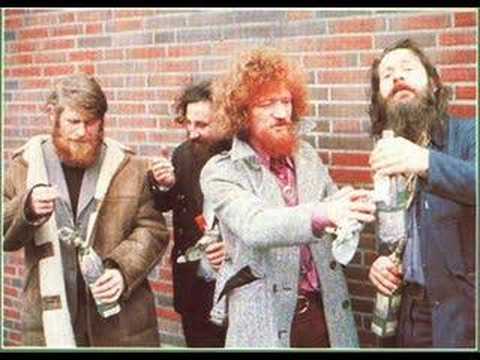
 The best known songs are probably traditional ones. The tune of Molly Malone, for example, has become part of a general consciousness and sometimes the first thing people think of when they hear the word ‘Dublin’. The lines starting ‘ She wheels her wheel barrow ...’ have become not only a ubiquitous chant at football matches, with a team name replacing the cockles and mussels bit, but have also been heard at  political demonstrations (‘ She wheels her wheel barrow through the streets broad and narrow, crying...smash the bourgeoisie’). It was one of a whole genre of songs that helped to imbue a very traditional view of the place, continued in a score of bar-room ballads and rollicking sing-a-long choruses. In 1967 folk group the Dubliners hit the UK charts with two traditional songs, Black Velvet Band and Seven Drunken Nights, (though they were only allowed to sing about five of them on TV and radio). They also, very satisfyingly, looked just like what many people imagined Dubliners would look like.


This notion of an older Dublin continued to exist like the underlay of a photograph alongside the rise of newer images, whether that of a cosmopolitan and cultured European city with the euro and an early no-smoking ban or awareness of the emaciated heroin addicts in central Dublin or the large housing estates. This notion saw cobbled streets and elegant Georgian houses, fiddlers in traditional pubs and earnest drunken discussions about Joyce and Yeats over Guinness. Some songs continued to reflect this Dublin. Loreena McKennitt’s Dickens’ Dublin (The Palace) brought back to life a city from 150 years before:” I'll huddle in this doorway here till someone comes along. If the lamp lighter comes real soon ,maybe I'll go home with him.” The 19th Century Rocky Road to Dublin, recorded by the Dubliners in the early 60’s – “Cut a stout black thorn to banish ghosts and goblins; bought a pair of brogues rattling o'er the bogs and fright'ning all the dogs on the rocky road to Dublin” - , has been covered by scores of artists, including the Pogues and the Rolling Stones.

The song that I associate most with Dublin, however, is not the Dubliners singing about Dublin nor the others mentioned. It is not actually a song about Dublin as such but one originally recorded in Dublin by a Dublin born artist who I first saw there and so, I think, counts as a personal link between listener and place. The song is Mmm by Laura Izibor, and this live version comes from a 2007 performance at the city’s Crawdaddy Club in Harcourt Street. To my mind she rates as one of the finest and most interesting soul singers of recent years – best heard solo at keyboards or piano, I feel - and some of her songs like I Dont Want You Back and Don’t Stay show a style that has echoes of artists like Carole King and Roberta Flack.

She is not, of course, the first black Dubliner in music - Phil Lynott of Thin Lizzy and Samantha Mumba came before – but she follows her own path in a changing country, though with her Irish accent sometimes causing surprise overseas. In an interview in 2009 she reported a typical response in America: ‘They've got black people in Ireland? Y'all live there and shit?'. She has done later versions of this song but the audience participation gives an added dimension to this one. Plenty of songs have been recorded live and many are also done with an eye on rabble rousing anthems that would get a live audience joining in: Queen were masters at that. What is less common is a recorded song where the audience are already an integral part. One of the few was by Chuck Berry, who had his sole Number One hit in 1972 - not, surprisingly, with Johnny B Goode or Roll Over Beethoven but with My Ding A Ling, recorded live with a student audience supplying the chorus. (Given the era , the students in the clip below seem to be remarkably fresh faced and clean cut!)

Cities have their own sounds. Maybe it would be traffic and sirens in New York; church bells in parts of Paris or Rome; the distant sound of the carousel in the Tivoli Gardens in Copenhagen. Probably it should be the sound of a fiddle or accordion in Dublin – but I will settle for ‘mmm’.